I’ve run my life on Getting Things Done for twenty years, and for most of them I was the kind of GTD person who writes his own tools. Plain text task file, contexts, a weekly review checklist, and a small drawer of shell scripts, because the apps never quite did what I wanted.
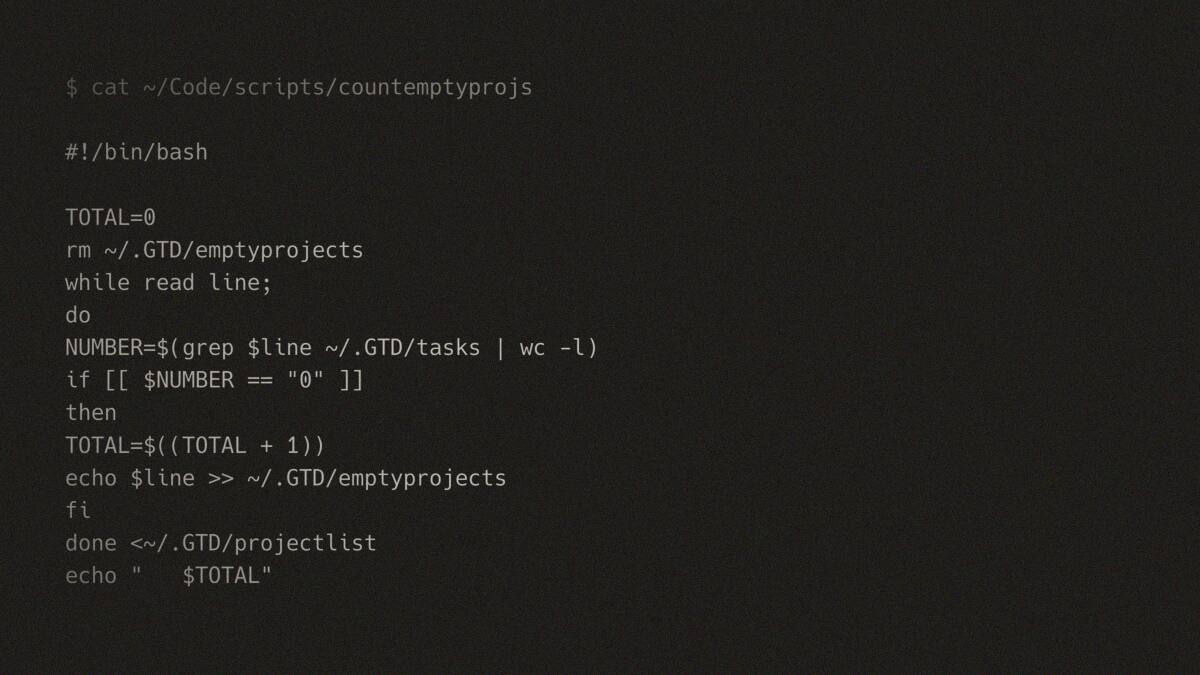
The script at the top of this page is my favourite. It’s fourteen lines long and it’s called countemptyprojs. It goes through my project list, checks each project for a next action, and prints the number that don’t have one. In GTD an empty project is a small emergency, a promise you’ve made yourself with nothing attached that would move it forward. Every system that runs long enough collects them, the way a hull collects barnacles, and I wanted mine counted.
I mention it because most people run a productivity system for years without ever working out how theirs fails. I’d worked out mine well enough to write software for it. If devotion to the method were the measure, I’d have reached mind like water a long time ago. What twenty years actually taught me is that the lists were never really the system. The weekly review is the system, and the weekly review is always the first thing to go.
Everyone falls off
If you’ve run GTD for any length of time, you’ll know how this goes, because it goes the same way for everyone.
Life gets loud. Something at work goes sideways, or you get home with your body clock still somewhere over Asia, or the family needs you more than the lists do. Friday’s review slides to Sunday, then to “early next week”, which ought to be carved on the method’s headstone. A month later the lists are a historical record, and because some part of you knows they’re out of date, your head takes the job back and starts tracking everything itself, in the background, badly. That’s exactly the problem the whole thing was built to solve.
I’m not writing this as the man who finally fixed his character. My review has broken in Tianjin and it has broken in England, because it breaks for everybody. It goes first because it’s the one part of GTD you can’t do tired, and the weeks that break your system are the weeks that leave you with nothing else.
For twenty years I treated that as the price of the method. This year I stopped paying it, and not by becoming more disciplined. I hired someone.
The librarian
What I built sounds a bit underwhelming, which is rather the point.
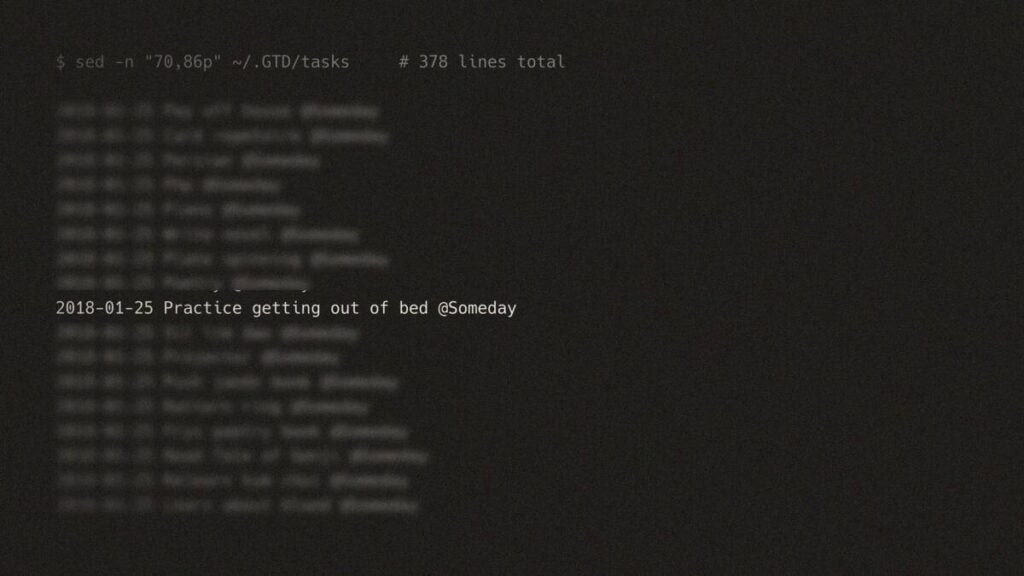
My system is now a folder of plain text files, kept in git and synced between my machines. There’s a task list, a file for each project, an inbox folder anything can be dropped into, and a log of decisions with the reasons, because I never remember the reasons. There’s no app. It’s a filing cabinet made of text, which is the one format every tool I’ll ever own can read.
On top of the folder sits an AI with standing instructions. It took me a while to find the right word for what it does, and the word turned out to be librarian.
When I finish a piece of work, or think out loud in the car, it files whatever’s left over. A task I mentioned in passing goes on the list. A decision gets logged with its reason. The project’s status note gets updated, so the next conversation can pick up the thread without me explaining it all again. Anything that doesn’t fit goes in the inbox instead of on the floor. None of this is exciting. It’s the work I was supposed to do every Friday and didn’t, done at the moment the paper’s in my hand, by something that doesn’t find filing boring and doesn’t get tired at the end of a quarter.
And I hardly ever see the lists now. The full list is about a hundred lines long, and every morning I get a short numbered day instead. When I’ve got two free hours and ask the oldest question in this whole field, what should I do, the librarian isn’t allowed to show me the lists at all. That’s written into its instructions. It answers the way a good chief of staff would, with at most three options: at least one from something that matters to me and has been neglected, no more than one that’s urgent, and all of them weighed against how much energy I’ve actually got, not just the dates.
The lists still exist. I just don’t live in them. Owning a library and sleeping in one are different things.
The reservoir
Two things came out of the handover that I hadn’t planned and wouldn’t now give back.
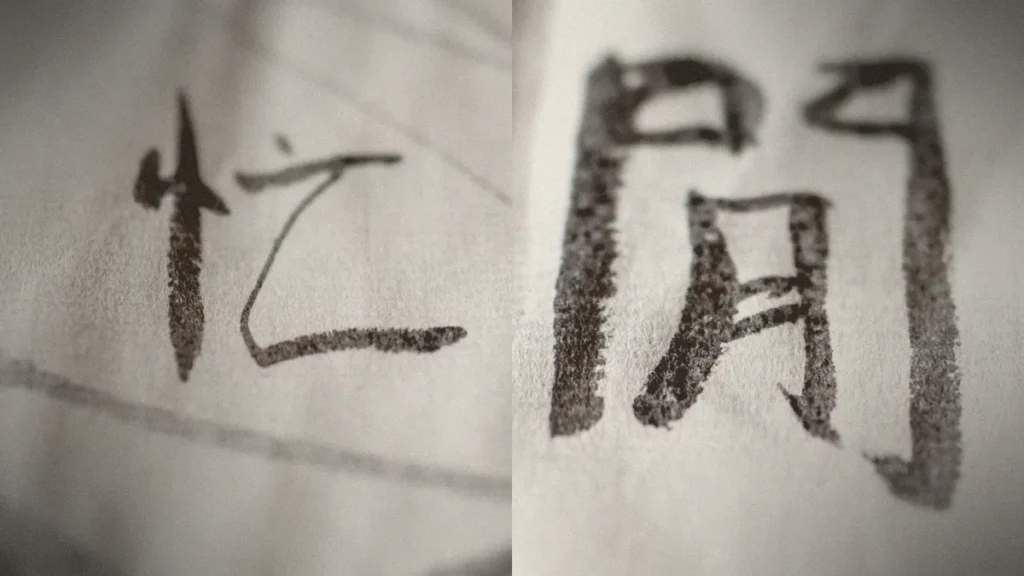
The first is the name. When the folder needed one, I did something I do more and more with naming problems and asked the AI to pick. It chose Dantian. If you’ve never done tai chi, the dantian, 丹田, dāntián, is the point a few centimetres below the navel where the practice says you build up and store energy. You breathe into it for years before you believe it’s anything more than a metaphor. I’ve practised tai chi for a long time, Yang style first and now Chen, so whether it knew it or not, the machine had reached into my own life for the word. And it’s the right word, because a reservoir is where your past self keeps what your future self will need, so that in a bad week you can draw on it instead of running dry.
The second I found while moving the old archive across. Next to the task file were a few small files I’d forgotten writing. One held a line of philosophy, “Keep balance. Movement and rest.” Another was a vision, written in the present tense, about a man who didn’t exist yet. I used to find files like that a bit embarrassing. Now I think they were the old system trying, with the only vocabulary it had, to hold the person as well as the chores. That was always what GTD promised underneath the lists, a mind that could trust where everything was kept. The old system could store those files. It just had no way of ever giving them back, so they sat there for years, unread, next to four hundred tasks.
The librarian reads them, and that turns out to be most of the difference.
What the method was for
Allen’s phrase for it is a trusted system, and I read past that for most of two decades. Every list, context and folder in GTD is there so your mind will believe the system is holding your commitments, because once it believes that, it lets go. The letting go is what you’re actually after. Mind like water is just what your attention does when it’s no longer being used to guard a warehouse.
The weekly review was the price of that trust, paid by hand every week for ever, because things drift and somebody has to walk the shelves. For twenty years the somebody was me, so the trust was always hostage to my worst fortnight. The librarian’s standing instructions are, near enough, my weekly review written down once, everything I was meant to ask myself on a Friday, carried out whether or not I’m jet-lagged.
I still decide, and I want to be plain about that, because it’s the part people picture wrongly. The librarian keeps the map up to date. It doesn’t pick where I’m going, and I wouldn’t let it. Its options come from lists I wrote, weighed by priorities I gave it, and I overrule it whenever I like, which is often. Having once run a company with real staff, the nearest comparison I can find is finally being able to afford the one employee I always needed, the one who keeps the books so the owner can think.
Ask me at Christmas
It’s new, and I won’t pretend otherwise. I set it up in July, so it’s about four months old, and I’ve spent twenty years watching my own systems get through the honeymoon and die in the first loud month.
It does make mistakes, and I check its filing the way you’d check a new assistant’s, closely at first and then less. The worst so far was a morning in August when it gave me three wrong answers, all from notes that had gone out of date. One was that my creatine goes in the protein shake, when I’d told it more than once that it goes in my coffee. It had changed one note and not the others that said the same thing. That’s the failure of a keen librarian, the kind you can see on the spot and fix in a sentence. The old failure was silence, six weeks of things going stale and a head filling back up, with no moment you could point to where it went wrong.
And some loud month soon I’ll fall off again. What’s different is what I’ll fall back onto. The old system needed a penance review before I could trust it again, while this one just needs me to walk back in. The books will be up to date and the options will be waiting, because whoever walks the shelves isn’t working to my schedule any more.
Everyone falls off. What I’ve built is the thing that holds the door while I’m away.