My plan for the first quarter of this year is a text file about a dozen lines long. The title I gave it: Q1: Chen Style & AI.
- Regular Chen style practice.
- Complete the SO agent.
- Keep the running going.
That’s a man intending to spend three months on one thousand-year-old body mechanics and on shipping a production AI system, and not noticing any tension between the two until the file is read back to him by someone else, with an eyebrow.
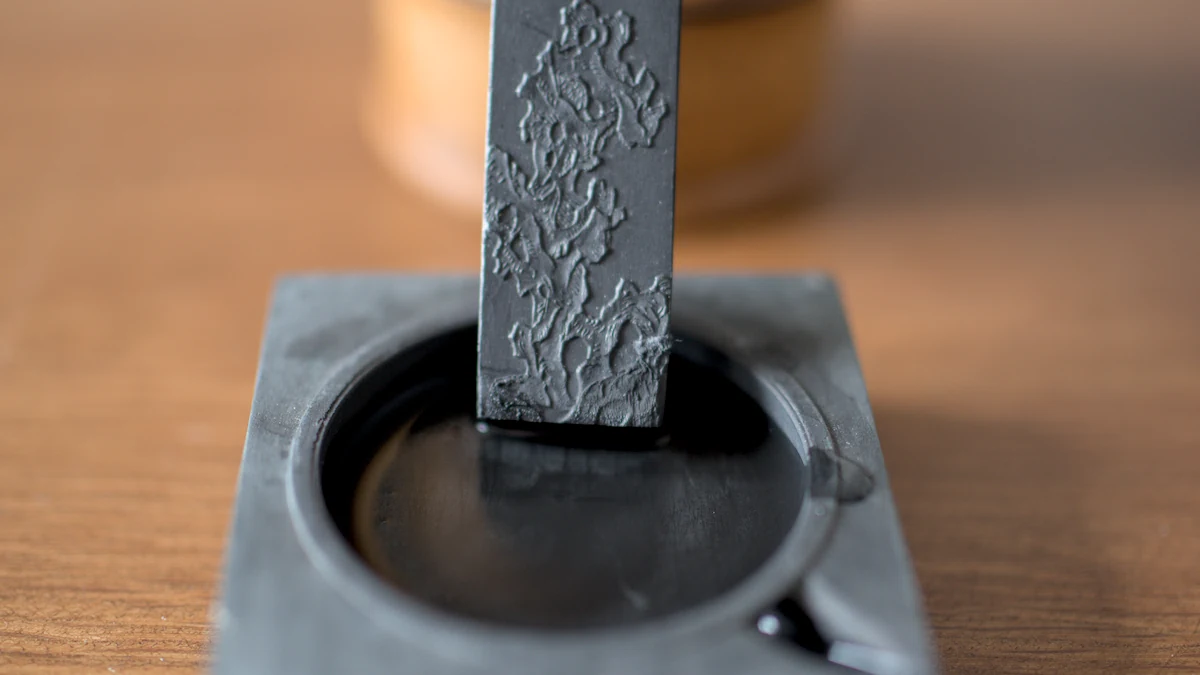
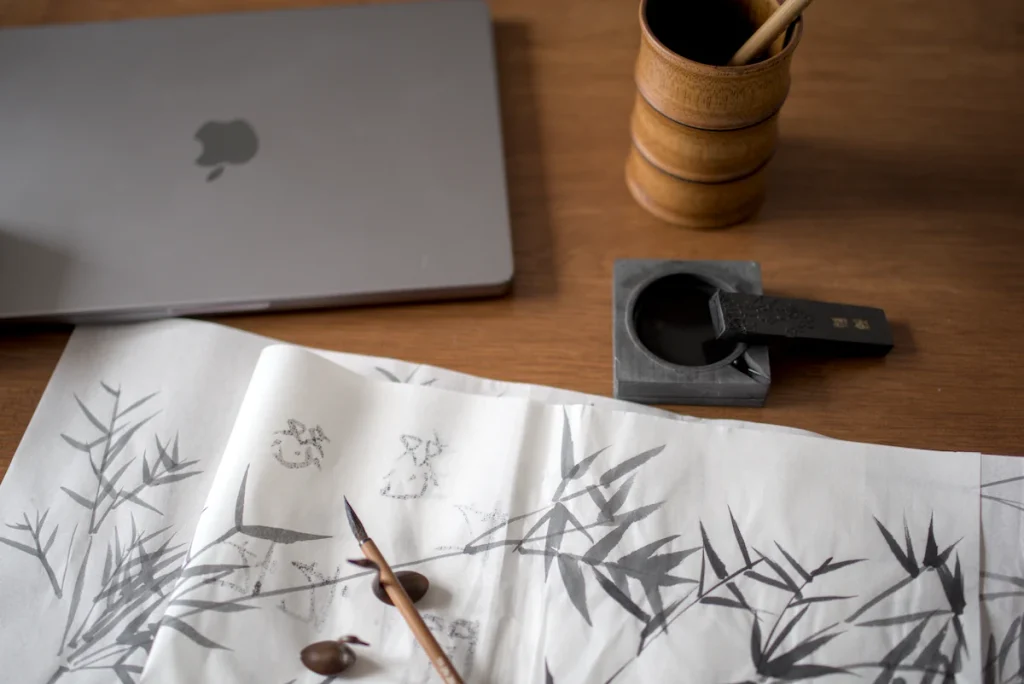
Because there is, apparently, a tension. I build AI for a living now, systems that read and write and increasingly make things, and when people learn what my early mornings and Saturdays look like, the polite version of the question arrives sooner or later. The tai chi form I am still refining after all these years. The ink stick, ground against a stone in slow circles to produce what a bottle from the internet produces in none, for brushwork a printer could counterfeit at four hundred pages a minute. Doesn’t it all feel a bit pointless now?
It’s the question of the decade, and I do not think the people asking it are being rude. Every practice that produces an artifact now shares a lane with a machine that produces the artifact faster, cheaper, and, at amateur grades, often better. Writing, drawing, translation, code, music. If the point of practice is the output, practice has lost its business case, and everyone from the hobby calligrapher to the junior developer is entitled to the same quiet vertigo.
I have been turning the question over all year, brush in hand, and I have three answers. They ascend.
The forklift and the deadlift
The first answer is the obvious one, and I state it plainly because the entire confusion of the moment hides inside it.
Nobody grinds ink to obtain ink. You can buy better ink than you can grind; any serious calligrapher knows this. The grinding is five minutes of enforced slowness in which the breath settles, the shoulders drop, and the mind arrives at the desk at roughly the same time as the body. The stroke drills that follow are not manufacturing characters. They are manufacturing the person who can make them: patience in the wrist, honesty about a wobble, the very specific humility of doing a thing eight hundred times and being merely adequate at it. I have written elsewhere about what the brush taught me about knowledge systems. This is the thing underneath that essay: the artifact was never the product. The page is a receipt. The practice is the purchase.
Say it that way and the machine question dissolves, because the answer has been standing in every gym for a century. A forklift out-lifts every human who has ever lived, and not one person has concluded that the deadlift is therefore pointless, because nobody was ever deadlifting to relocate the bar. The bar is a receipt too. Yet put the same logic in front of a keyboard and we all wobble: the machine can produce my output, so why produce? Because you were never producing output. You were producing you. Nobody is confused about the forklift. We are all, suddenly, confused about the brush, and it is the same confusion wearing better clothes.
Taste is the residue of reps
The second answer took me longer, and it is the one I would put in front of anyone whose work now involves directing AI, which is rapidly becoming everyone.
My working week is spent reviewing machine output. Code, prose, extractions, decisions: plausible material arriving at extraordinary speed, most of it good, some of it subtly wrong in ways that do not announce themselves. The scarce skill in that arrangement is no longer producing the material. It is judging it. Knowing which of five plausible drafts is actually right. Feeling the paragraph that reads beautifully and says nothing. Catching the code that runs and should still be refused. My eye for that last one was not installed with any toolchain. It is the residue of twenty-odd years of writing my own subtly wrong code and paying for it personally, the same way I know good ink because I have ground bad ink, hundreds of Saturdays of it, too thin, too coarse, rushed on cold mornings, and the same way I can feel a wrong brushstroke coming before it lands, because my own wrist has produced every possible wrong one, in order, over years.
Judgment is compressed experience. There is no compression without the experience. The engineers I trust most around AI are, without exception, the ones with the most hours of doing the work unassisted, and that is not gatekeeping nostalgia, it is mechanism.
So the honest bargain of this decade is stranger than either the enthusiasts or the mourners have it. The machine sets the floor: nobody needs your mediocre output any more, it is available by the litre. But practice sets your ceiling of discernment, and discernment is now the job. The age of infinite output quietly doubles the value of anyone who knows what good looks like, and knowing what good looks like is manufactured in exactly one place. On the mat. At the stone. In the reps the machine was supposed to have made unnecessary.
That is why the two halves of my quarterly file are not in tension. They are the same programme. The form trains the judge. The judge ships the agent.
An hour that is yours
And then the third answer, underneath the other two, which has nothing to do with usefulness at all. I only see it clearly because of the strangest practice I keep.
Tai chi has an exercise called zhan zhuang. Standing practice. Knees soft, arms rounded as if holding a ball that is not there, and you do, to any observer, nothing, for a long time.
Standing produces no artifact whatsoever. There is no output for a machine to beat. Which makes it the perfect test case: strip production away entirely and see what practice is left holding.
What it is holding, it turns out, is an hour that belongs to you. No feed, no output, no audience, nothing being optimised, nobody being served. Attention, gathered in one place, in a body, for a while. I do not know a scarcer commodity this decade, and I notice the machines are not competing for that hour. They are competing against it.
So, Saturday mornings, the stone. Not because the machine cannot make the mark. It can, and some weeks, honestly, better. But the hour makes me, and that particular manufacturing I am not willing to outsource.
The bargain, restated
None of this is a case against the machines. I build them, gladly, and I will be building them again on Monday. It is a case for precision about what they replace, because the panic and the hype are both sloppy on exactly this point.
Let the machine raise your floor wherever output is genuinely the point. Draft the boilerplate, catalogue the collection, lift the pallet. There are no prizes for grinding through work the forklift does better, and pretending otherwise is not craftsmanship, it is costume.
Guard the practices that build your ceiling, because directing the machines is now the work, and the ceiling is built from reps that cannot be delegated.
And keep at least one practice, one, that produces nothing at all. Not for wellness, not for balance, not for any reason that would survive a business case. As proof, renewed weekly, that you are still the one holding the brush.
All week I direct machines. The brush does not need directing.
That is rather the point.