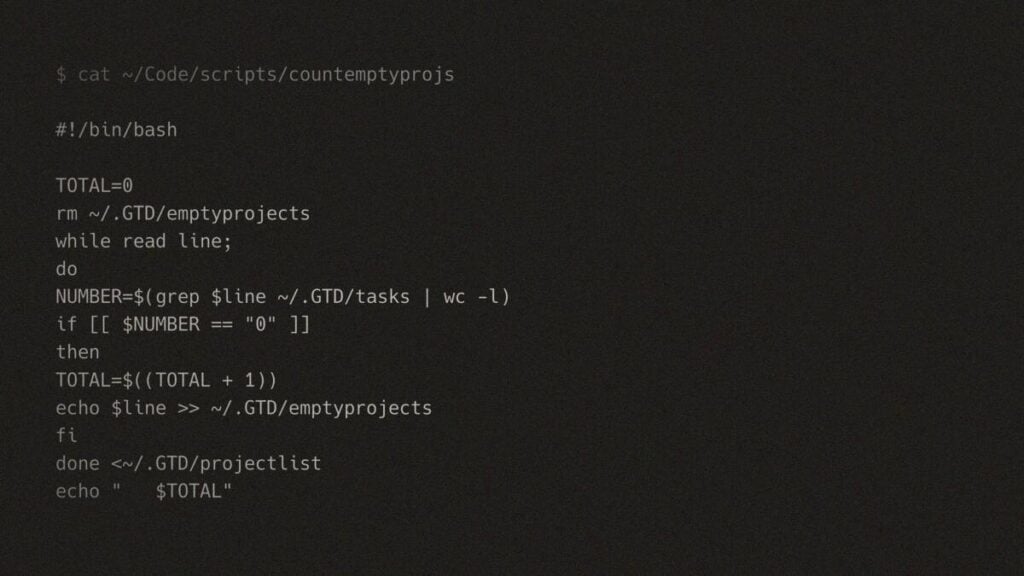
I started teaching myself to program in 2009, and one of the first proper things I built, a couple of years later in Tianjin, was an app for my humidor. It was a desktop program written in Java, with a small database underneath, and it kept track of what was in the box, held my tasting notes and added up a few statistics in a panel of its own. Most of the notes were for Montecristo and Upmann, and both are still in there.
It took me years to see the joke in that app. I’d built a machine for keeping an eye on the one thing in my house that does best when nobody keeps an eye on it.
I suspect most people have built something like it, though probably not in Java. Somewhere you keep the things you’re saving for later: the articles you’ll read when there’s time, the course you’ll do one day, the someday list, the notes app with forty ideas in it, each of which felt important on the afternoon you wrote it down. If yours is like most, it doesn’t feel like a collection. It feels like a debt. Every time you open it there’s a bit more of it, and the things at the bottom have gone off while you weren’t looking.
The humidor is the only thing I own that works the other way round, and I’ve spent a fair amount of time wondering why.
The one thing in the house that gets better
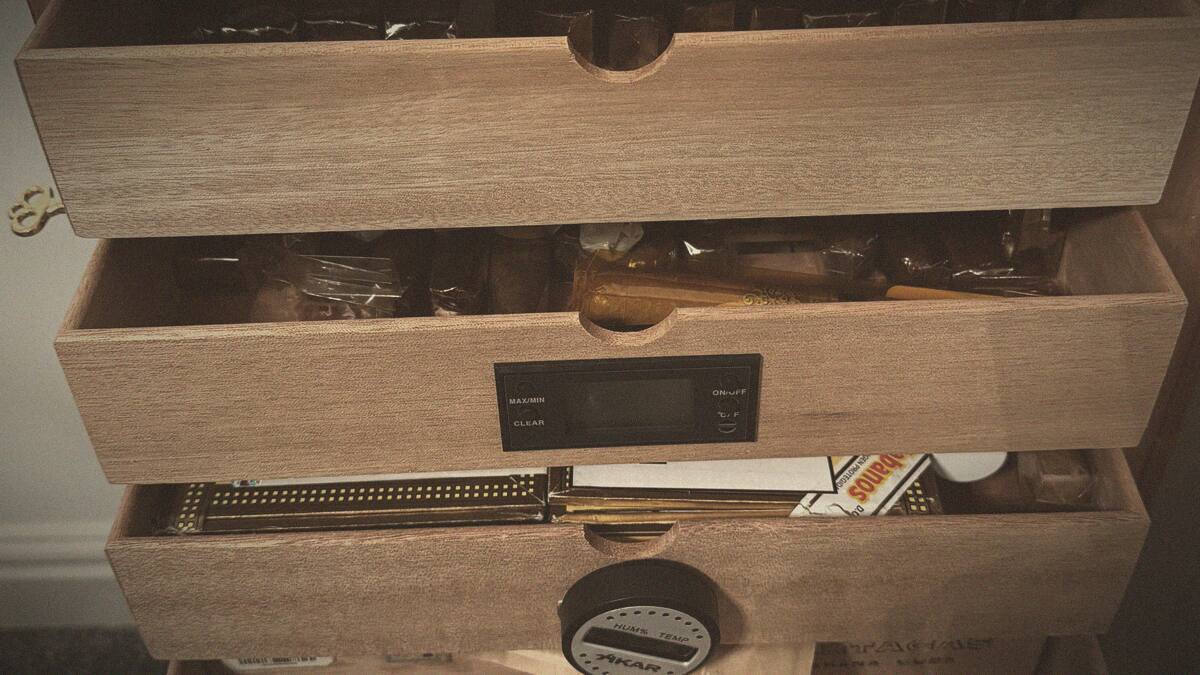
I’ve smoked cigars since 2009, though smoked is a generous word for it. I get through fewer than five a year, and I’ve come to accept that what I really am is a collector who occasionally lights something. The collection is still mostly Cuban: three boxes of Partagás, a box of Montecristo No. 2s and two of No. 5s, some Cohiba and Upmann, and a few Partagás Culebras, three cigars braided together like snakes. The New World cigars are the newcomers, bought on trips to the States over the last few years. Some of the Cubans go back to the eighties, which makes them older than Google, and some are from my own first year. Those are about the same age as Uber, and they’ve spent the time very differently.
What they’ve been doing, if you believe the people who know far more about this than I do, is improving. Cigar Aficionado’s explanation is that as the tobacco slowly gives up some of its moisture and oil, the flavours settle down, marry and mellow, and the longer you wait, the more you notice it. A cigar that’s sharp and a bit loud in its first months can be soft and round a few years later. Nobody does anything to it. It needs a steady humidity, a dark box, and to be left alone, and the last of those is the one I find hardest.
My main humidor is a cabinet, big enough that it has a door rather than a lid, and it only works if the door stays shut. Every time you open it, a little of the conditions walk out with you, and a humidor that’s opened every day spends its life trying to recover. The cigars that improve most are, more or less by definition, the ones you’ve forgotten you had, which is a strange thing to discover about a collection you’re fond of. I’m not sure they ever needed a database.
A queue and a cellar
The difference, I think, is that the reading list is a queue and the humidor is a cellar. A queue is there to be emptied, and everything in it gets worse the longer it waits. The article goes out of date, the course is replaced by a newer one, and the idea you scribbled down on a Tuesday loses whatever it was that made it exciting. A cellar is there to be kept, and nobody walks into a wine cellar and feels behind.
Most of what we save belongs in the queue, and treating it that way is right. But I’ve kept a someday list for close to twenty years, in the GTD way, and over that time I’ve noticed that a few of the things on it behave much more like the cigars. The clearest case was a set of juggling clubs. For years I wanted a particular make, Henrys, which are German and rather expensive, and they sat on the list because I was living in China and couldn’t easily get them. When I was finally back in the UK on a trip and could have bought them, I found the pull had gone. The excitement had been about those particular clubs, and once it had worn off, what was left was the part worth having, which was good clubs to juggle with. I bought a set from Juggle Dream for a good deal less. They do exactly the same job, and I’ve used them a lot.
Just as often, the opposite happens. I come back to something I was sure about a year ago and can’t remember why I wanted it. That used to feel like a failure, and I’ve come round to thinking it’s one of the most useful things a list can do for you. The idea died in the box, where it cost nothing, instead of in my calendar, where it would have taken a month of evenings to find out the same thing.
So some ideas age and some don’t, and the box can’t tell you which. You have to decide that yourself, and the trouble is that a humidor makes a wonderful excuse.
Will time improve it, or only delay it?
Plenty of things don’t age at all. Anything with a date on it goes off, the renewal, the form, the reply someone’s waiting for. And some of the things that go off fastest have no date on them. A thank-you means a little less every week it’s late, and an apology left in a drawer for a year doesn’t come out mellow.
So the question I’ve learned to ask, of anything I’m tempted to leave for later, is whether time will improve it or only delay it. If waiting will change the thing itself, the way it changes a cigar, it can go in the box. If the only thing waiting will change is how long I’ve been avoiding it, then nothing is ageing at all. I’m leaving a cigar out on the side to dry, and it had better be dealt with this week.
Where I find the question most useful is right at the start, when something new and exciting turns up and I’m about to put it on my to-do list. A new idea is like a new cigar. It’s loud and a bit harsh, and most of what you can taste is the excitement. So unless it has a date on it, it’s worth asking whether it could go on the someday list instead, or into the tickler file, the GTD folder that hands things back to you on a date you choose, a month or so out. When it comes back the excitement will have worn off, and you’ll be able to taste what’s actually there. If you still want it, it was worth doing. If you don’t, you’ve lost nothing but a month.
The list you already have can be sorted the same way. Move the few things that might improve with time somewhere out of the daily view, a separate list or the back of a notebook, and look at them rarely, once a month or once a season. When you do, treat them like the humidor: take out anything that’s ready, and shut the door on the rest. Everything left on the original list was never ageing in the first place, and it either gets done or gets deleted.
When I do smoke one, it’s nearly always a Montecristo No. 5. It’s a small cigar, twenty-five minutes or so rather than an hour and a half, and it suits the evenings I actually have. The 2009s stay where they are. They aren’t waiting for an occasion, and I’m in no hurry to give them one.