Tibetan won’t let you tell me there’s tea in the pot without also telling me how you know.
If you can see it, there on the table in front of you, it’s one verb. If it’s your tea, in your house, something you know about because it’s yours, it’s another. If somebody told you, or it’s just the sort of thing everyone knows, there’s a third. Use the wrong one and a Tibetan speaker hears you claiming something you’ve got no right to claim.
English has nothing like it. Every sentence you’ll read today, including the ones written by machines, arrives sounding like an eyewitness.
The verb tells you how I know
I’m learning Tibetan, four mornings a week at the moment, which is an odd thing for an Englishman to be doing before work and which I’d recommend to anyone. The first thing the language does is take away your right to state a fact without saying where you got it.
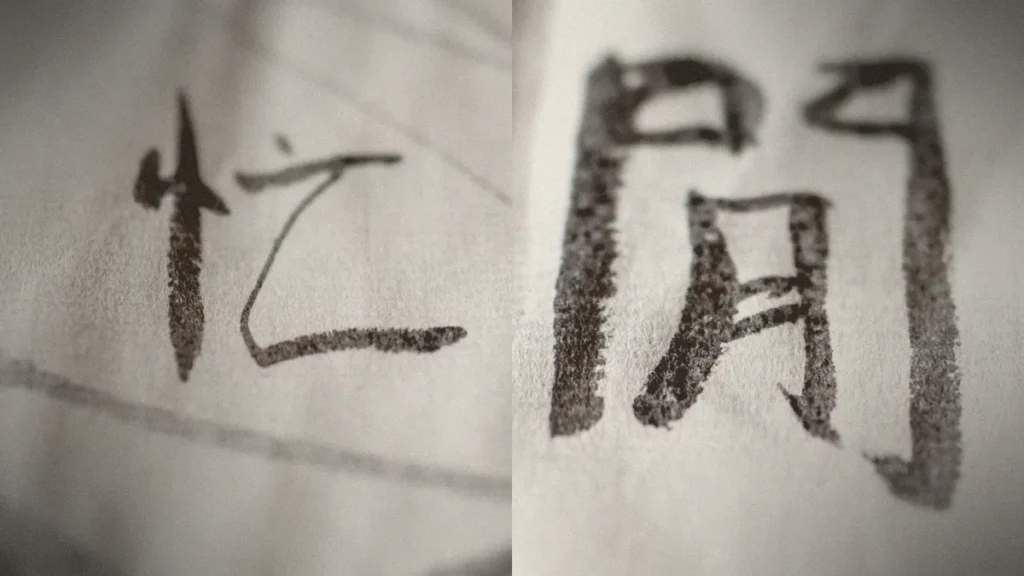
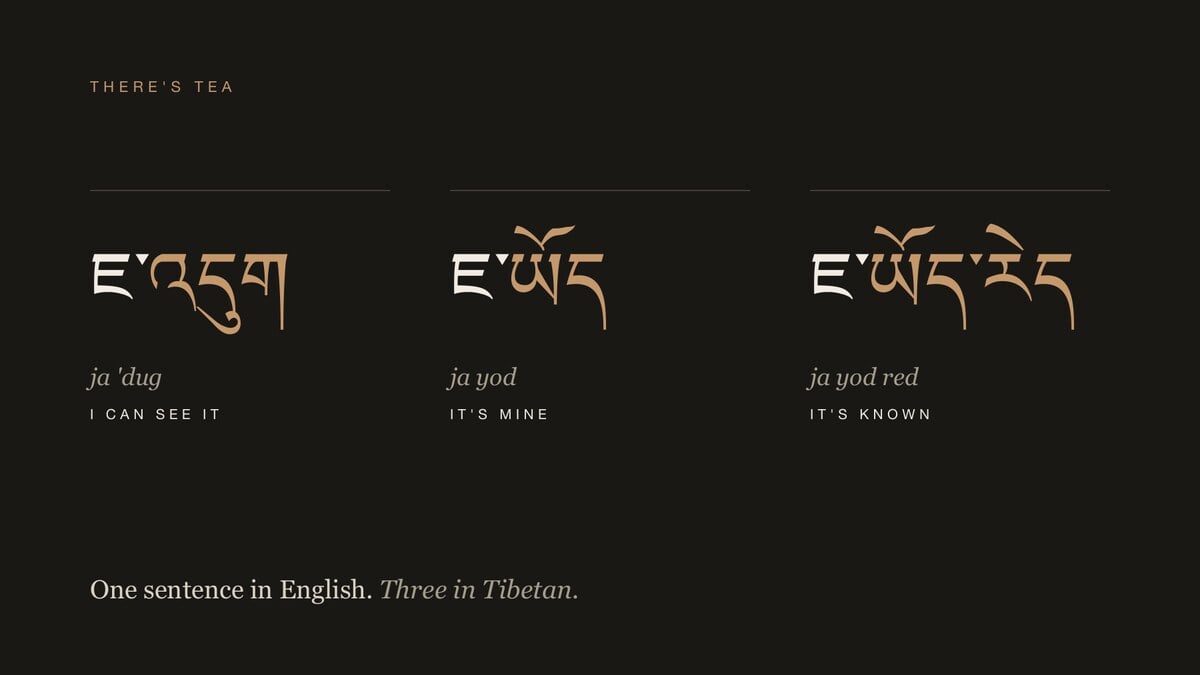
Take the tea. ཇ་ཡོད, ja yod: there’s tea, and I know because it’s mine, or because I’m the one in this house who’d know. ཇ་འདུག, ja ‘dug: there’s tea, and I can see it. ཇ་ཡོད་རེད, ja yod red: there’s tea, as a general fact, the sort of thing you know or were told. In English that’s the same sentence three times. In Tibetan it’s three different claims about where the speaker stands in relation to the truth. The same split runs through “is”, with ཡིན yin for what you know from the inside and རེད red for what’s simply the case.
Beginners reach for the eyewitness form for everything, because it sounds confident, and it’s one of the first habits a teacher corrects. You didn’t see it, you were told, so you can’t say འདུག. After a while of being told what you’re not entitled to say, something odd happens, and you start hearing the missing verb in English.
Linguists call this evidentiality, and Tibetan is one of the languages that builds it into the grammar instead of leaving it to the speaker’s conscience. That’s all the linguistics this piece needs.
English spends its grammar on when, not how
Think about how much work English puts into time. Walked, walk, will walk, have walked, had been walking. The tense system is elaborate to the point of vanity. Now think about how much it puts into evidence. “The report is late.” Did you watch the deadline go past? Work it out from an empty folder? Hear it from someone in the corridor? The sentence is the same in every case, and it lands with the same confidence.
We do have words for this, apparently, reportedly, I gather, but they’re optional, and they’re the first thing to go. Pass a sentence through three people in an office and it’s usually lost its source by the second, and by the third it’s a fact. Anyone who’s watched a rumour turn into a line in a board paper has seen it happen. Usually nobody involved is lying. English just doesn’t give you a cheap way to carry the source along with the claim, so the source gets dropped, the way you’d put down anything heavy that nobody asked you to carry.
Tibetan makes carrying it free. It’s in the verb, and you can’t drop it without saying something wrong.
The machine always sounds like an eyewitness
Now put a language model in the room.
Everything it writes comes out in the eyewitness register, because that’s the register of the English it learned from. “The contract was signed in March.” “The customer prefers delivery on Fridays.” “This approach is widely used in the industry.” The model has never seen a contract, and it wasn’t there on the Friday. It’s hearsay all the way down, hearsay of enormous range and often very good quality, delivered in a grammar that can’t mark it as hearsay even if it wanted to. I think that explains more than any failure of intelligence about why fluent wrong answers get through review. The sentence carries no flag, and it sounds exactly like what a colleague would say after checking.
The industry has noticed, in its way. Grounding, citations, source links, provenance: a whole discipline has grown up around bolting an evidential onto English after the fact, at some expense and with mixed results. Tibetan speakers do it in the verb every day, and it costs them nothing.
Part of my job is building systems where a model reads documents and then acts on them, and the most useful thing I’ve found for making those trustworthy isn’t a cleverer prompt. It’s showing the evidence. Beside every conclusion goes the phrase it came from: here’s where I read the quantity, here’s the line I matched to this account, here’s the field I couldn’t find, so I’m telling you instead of guessing. Once people can see that, they stop redoing the work and start checking it, because a glance is enough to tell what was seen from what was told.
Three words you can use tomorrow
You don’t need a new language. You need three words, and the habit of attaching one of them to anything that matters.
Seen. I checked the source myself, whether that’s the document, the number or the person. That’s འདུག.
Inferred. I worked it out from things I saw, and here are the steps. This is the honest middle, it’s where most professional judgement lives, and it’s the one people are most tempted to upgrade to seen.
Told. Someone, or something, told me, and I haven’t checked. That’s closest to ཡོད་རེད, and there’s nothing wrong with it as long as it says what it is.
Put them in your notes. Put them in the report that goes upstairs. And above all, put them to the machine. When a model gives you an answer, ask it which of its claims it saw in the material you gave it, which it worked out, and which it’s telling you from somewhere else. It answers that surprisingly well when you ask, and it never once volunteers it. The most useful question I know in a project review is four words long: is that seen, or told?
The monks made a sport of it
There’s a courtyard at Sera monastery, on the northern edge of Lhasa, where the monks debate most afternoons. One stands and one sits. The standing monk puts a question, and as he finishes it he claps, hard, with a stamp of the foot, and the seated monk has to answer. It goes on for hours and sounds like a small storm, and more often than not they’re arguing about exactly this, how you know something and what follows if you do.
It’s hard to read about that courtyard and then look at my own trade without some embarrassment. Here’s a culture whose grammar already asks for the evidence, and which, not satisfied with that, made a sport out of it, so that young men would spend their afternoons being clapped at for claiming more than they’d seen. And here are we, having built the most fluent speaker the world has ever had, and having forgotten to give it the verb.
We can give it the verb ourselves, and it isn’t much to ask. It’s three words and the habit of noticing which of your own sentences you’re entitled to.
The rule the grammar teaches, translated out of it, is the best rule for this decade that I know. You can’t say the tea is hot until you’ve touched the cup.